You have probably been aware of the tension without having to be told about it in case you have set a foot on a dance floor in France not too long ago. Perhaps it was during a lesson, some teacher moved a way that the students did not expect her to move. Perhaps, someone said to you, That is not Kizomba really. Or perhaps you are new to it, and you do not understand why people spend their time arguments over what seems like the same dance.
This is not the matter of steps. It is all about identity, history, and the way humans feel in the dance area. Are you ever at a loss to what the Kizomba scene in France is all about? Then here is how to make both the movement and meaning clear.
What Is A Traditional Kizomba?
History and Culture-Based Dance
Roots Kizomba is an ancient dance originated in Angola and is greatly influenced by semba, an elderly African couple dance. The movements are down-to-earth, and fluent and based on emotional contact. It is a dance that is danced up close, expressively and affectionately. To a large extent, the values of its cultural origins can be projected on the approach, music as a conversation, the movement as a common language.
The Way in Which It Has Come and Developed in France
Kizomba swept the world and in countries such as France, Belgium and Switzerland, it had a special place in countries that speak French. The music was not a new one. The music was melodious. The dancers welcomed the intimacy and relaxing essence of the style and educators started to sell classes in local centers, small studios as well as in family gatherings. Traditional Kizomba grew to be a silent forceful force in France.
Urban Kiz – What Is It?
French Translation of a World Dance
Urban Kiz grew in France and it is not a rejection of Kizomba, but rather a dimemption. Incorporating hip-hop, R&B and electronic music, dancers incorporated sharp isolations, dramatic pauses and a standing frame. The power changed. The position raised. The music had changed as well, to reflect on the rhythms and structures that fit an urban setting, through beats and breaks.
The Reason Why Urban Kiz Erupted in France
It was in trend with contemporary French dancing. Urban Kiz appeared well in videos. It appealed to dancers in other styles who enjoyed the technicality and stylistic clarity of expression. France turned out to be the international seat of this new style as it sent it out to the rest of the world by way of festivals, YouTube clips and workshops across the globe.
The Reason Behind the Debate
Cultural Preservation vs. Creative Expression
When Urban Kiz became popular, it bothered many members of the traditional Kizomba community. Angolan and other African teachers witnessed how the movement was taking a different turn, not necessarily with the reference to its origins. They believed that the essence of Kizomba, its music, its purpose and its African nature, were being swapped out by performance-oriented versions of this music that had nothing to do with its roots.
Naming the Naming Not Neutral
This is where it comes to home. The word Kizomba is being used by many events and teachers to advertise Urban Kiz classes and this is mind boggling to new dancers. This seems to be disrespectful to traditionalists, at least. When it is the same name in case the movement, music, and method are not the same, why is the same name used?
There is no straight answer. To most French teachers, the process was slow and they still identify strongly with the original meaning. However, that does not eliminate the tension especially among the people that view Urban Kiz as something completely different.
The Making of the Epicenter of the French Scene
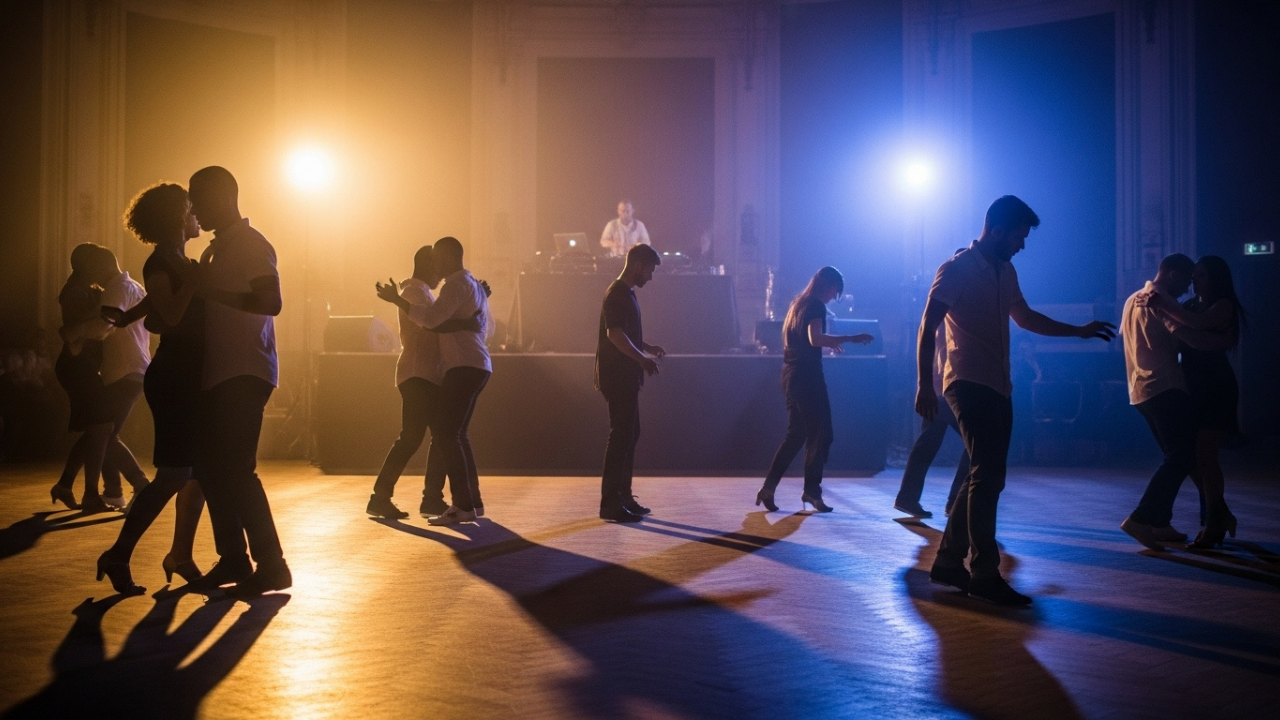
France is not merely the realm where the both styles coexist. It is the place whereby they crash. Traditional as well as Urban dancers are found at social dances: in Paris, Lyon, Marseille and Toulouse just to mention a few. They usually share same events, and sometimes even the same dance floor. It is never smooth sailing though.
Dancers who are used to a certain style find it difficult to change in the middle of the song. Traditional believers are overwhelmed by the aesthetic characteristics of Urban styling. Urban leaders are left in an inconvenient position in their efforts at maintaining things near and gradual. What this brings about is tension, a lack of communication and a silent sense of being left out on many of the dancers side even though nothing is stated to anyone audibly.
The Tactile of the Dance: Changing the Style of Experience
Grounded vs. Lifted
The traditional Kizomba originates. The knees are bent. The movement passes through the hips. It has to do with soft presence and micro-movements. The relationship with a partner is also steady and in most cases very intimate, a feeling as though one walks along with a purpose and an emotion.
Urban Kiz is raised. It occupies more space, stresses lines and directions shifts and also contains stylized pauses that are common to electronic or remixed music. A harsher accent can frequently be found between motion and non-motion. It is more of choreography, more outward.
Embrace and Energy
The embrace also is different. The Traditional Kizomba prefers the constant and the round movement – the movement in which both partners adjust to each other. Open breaks, pivot points and linear travel are common in Urban Kiz. They are both intimate, though in different way but the emotion towards the leader and the one following is dependent on the style.
Why It Is Not a Technical Debate
This is not regarding what is wrong or right. It is all about clarity, history, and destruction. Traditional Kizomba is also traditional because it has the memory of the people and this memory frolics with memories of colonization, diaspora, and the retention of African identity through dance and music. It does not seem to be evolution when such roots are neglected. It seems erasing.
Urban Kiz in its turn is not necessarily disrespectful. It is also adored by many dancers because of the reasons that are quite valid—its form, its intensity, its ability to express. But when it appropriates the title Kizomba without acknowledging the culture that she was born out of, the debate shifts to the matters of creativity to that of cultural conflict.
What French Dancers Say Back of the Music
During festivals one can get carried away by the acts. Sea of people, perfect moves, camera stroks. However outside the stage dancers around the entire nation of France are engaging in different whispers. Substantive dialogue.
A few of the traditional dancers claim that they no longer feel at home with a dance floor crowded with Urban Kiz. The music has marked some difference. The relationship is not the same, one dancer in Marseille remarked. I do not see the dance that I fell in love with.
Others who include even novice dancers enjoy freedom in Urban Kiz. One of the followers based in Paris said, He found structure in Urban Kiz. Now I was able to follow without guessing. It was logical to me.
Both parties are not to blame. Both are feeling unheard. The thing is, silence in between styles, not the difference of style.
Educators Attempting to Educate the Two Worlds
As an instructor in France, teaching Kizomba nowadays does not only imply teaching steps. It implies describing the origin of such steps, their modification and what a student is learning in fact.
A number of teachers even begin their lessons with an explanation, which goes, “This is Urban Kiz, not Kizomba.” That is one sentence that can change the whole focus of a lesson. It is a sign of respect. It welcomes openness. And it assists students in being purposeful learners.
However, not every teacher does this. Others address both of them with that name, Kizomba, either out of habit or in marketing. The result? Students walk out of a class not knowing anything that they have learned, worse yet, they will believe that both styles are similar.
Education is not something that occurs in the steps. It takes place in the context. Dancing instructors who teach the technique and relate the history develop better and more respecting dancers.
Dance Festivals: Separate, Blended or Divided?
Europe boasts of the biggest dance festivals in France. The events attract dancers worldwide many of which are keen to learn or perform their Urban Kiz. However, traditional Kizomba is not always included into the program.
There are other festivals where the rooms are divided into Urban Kiz and the traditional one. Some others will plan to have various days and varieties. Some of them are trying to integrate the two in a single social space. Yet still there is tension at that. The songs are performed. The styles are in conflict. And dancers are not always sure where they are supposed to belong.
This is not merely a time gap issue. It is a culture one. Mixing without understanding causes confliction. Good labeling brings in feeling of inclusion.
The Music Makes Sense — Although You May Not Have a Clue to the Lyrics
Music is not just secondary. In Traditional and Urban both, the dance is formed by the music. However, the impression is not the same.
Kizomba Traditional music usually has a story about love, suffering and identity. It’s emotional. Smooth. Melodic. Due to the rhythm, dancers make softly, rolling movements. Even the lyrics (configured most often in Portuguese or Kimbundu) are important, even when the dancer does not know the language. The tone is still translated.
The songs of Urban Kiz usually end up as remixes, ghetto zouk or instrumental versions of R&B music. They are characterized with breaks, beats, and sudden pauses. They entice accuracy, sharp turns and bombastic expression.
The dance comes with the music. And when you alter the dance you alter that which people feel in their bodies. That is why music counts in this debate not just as a piece of soundtrack, but as a verdict.
How to Choose the French Kizomba Scene (To New Ultimates)
You are entering a complicated world, especially, when you are new to Kizomba or Urban Kiz in France. However, it does not imply that you have to act intimidated. It simply implies that you must be inquisitive and curious.
Ask the instructor what he/she is teaching and where that style originated. Experiment two styles regardless of which one is challenging. Look at the music variation. Observe the reaction of your body. These minute details will make you an actual dancer through awareness.
And above all, respect the both styles. Urban Kiz lacks no merit. The old-fashioned Kizomba is not obsolete. Each is useful — yet in an unalike way. Study them with integrity and you will dance with more confidence and integrity.
Labelling of Experience
Other individuals explain that there is no need to label styles since it will bring more division. Naming is what is not the issue. Mislabeling is.
That is not inclusion when a dancer arrives at a “Kizomba” event hoping to get the traditional style only to get Urban Kiz playing the music all night. That’s confusion. Labels do not stiffen. They serve as instruments. They assist human beings in making their desires.
Organisers of events, teachers, DJs, they all create a discourse in the minds of the people. This will be through labeling their offerings candidly which empowers dancers to exercise their choices informed. Dancers lose faith when they cross the boundaries.
The obvious labels produce even greater freedom, not less.
Is It Possible That These Styles Can Live in Harmony?
It’s possible. And in France it is going on already in many places. There are classes that provide equivalent routes now where a teacher would teach Urban Kiz and/or do a traditional Kizomba, and as a rule, warm-ups are shared, respect as well. There are certain festivals that are characterized by respectful discussions on the panels and dancers of both communities share open discussions. Other DJs are proceeding to combine old school and Urban sets but make each transition clear.
The secret is not to combine the styles in a room. The secret is to create individuality with each style having its own space, its own music, its own voice, and without forgetting to respect each other.
This is the way of the real coexistence. Not by the violent blending, but by the sincere acknowledgment.
Style Comparison at a Glance
| Element | Traditional Kizomba | Urban Kiz |
|---|---|---|
| Origin | Angola | France / Europe |
| Music Type | Kizomba, semba | Ghetto Zouk, R&B, EDM remixes |
| Movement Feel | Grounded, flowing | Upright, sharp, stylized |
| Connection Style | Close embrace, small steps | Structured, open frame |
| Cultural Roots | Afro-Angolan identity | Urban fusion and visual design |
My Opinion
The dancing floor is a mirror. We do not come onto it just with our footprints, we come upon it with our narratives, our suppositions, and our selves. Urban Kiz vs traditional Kizomba in France, that debate is not disappearing. However, it need not segment us.
When dancers are open to learning, teachers provide context, and events refer critically, then there should be space to excel in both styles. Not by faking that they are equal. However, when you realize why they differ and why this difference is important.
Dance is not only something that we do. That is our way of relating with one another. And when we follow dancing, all are touched by the rhythm.