Bachata can be described as a beautiful, romantic, and popular dance style that has steadily gained recognition across the globe—especially in Europe. Whether you’re a complete beginner or someone who has always wanted to try Latin dance but never found the time, Bachata is one of the most rewarding and easy styles to start with.
And here’s something worth noting: not all beginner tutorials are in English. For a French-speaking learner or visitor in France, knowing that Bachata steps are explained in a clear and accessible way—in the French language—can feel like a light at the end of the tunnel.
In this article, you will find:
-
The basic steps of Bachata
-
Descriptions of the dance movements in French
-
The rhythm, posture, and key elements of the style
-
Tips for practicing even without a partner
-
Why learning Bachata in your native language (French) helps build faster confidence
Whether you’re enrolled in a course in Paris, attending a practice session in Lyon, or watching a tutorial at home on YouTube, this guide will help you step comfortably into the world of Bachata—one step at a time.
What Is Bachata?
Bachata is a form of social dance that originated in the Dominican Republic. It’s typically performed in close partnership and follows a simple 4-beat rhythm. Over the years, several variations have developed, including:
-
Traditional Bachata
-
Dominican Bachata
-
Sensual Bachata (a newer style that originated in Spain and is especially popular in France)
The reason Bachata is so beginner-friendly lies in its repetitive structure and emotional focus. While the timing is simple (counting 1, 2, 3, 4), the real character of Bachata lies in emotional connection rather than rigid precision.
Start by swaying side to side as you count. If you can do that—you’re already halfway there.
Why Learn Bachata in French?
Although most modern dance resources—online and in-person—are available in English or Spanish, many learners feel more confident when the instructions match their native language. This is particularly true for:
-
French-speaking beginners
-
Expats learning in France
-
Visitors attending local classes
Learning Bachata in French enables you to:
-
Understand choreography faster
-
Communicate actively with your dance partner
-
Follow group classes more smoothly
-
Avoid confusion with dance terminology
Whether you’re using online platforms, attending local studios, or exploring YouTube tutorials, recognizing the French definitions of common Bachata terms offers a significant learning advantage.
In the next section, we’ll cover those essential French dance terms and help you build a foundation that’s both practical and culturally attuned.
Interpreting Bachata Steps Structure: Learn the Basics in French and English
Bachata is danced in a rhythmic 8-count structure, typically broken down into two sets of four counts. Understanding this basic pattern is the first step to building confidence on the dance floor—especially if you’re learning in a French-speaking environment.
The Classic Bachata Count:
1 2 3 tap | 5 6 7 tap
Each “tap” is a light toe tap or hip motion with no weight shift. This moment allows your body to reset and prepare to move in the opposite direction. The simplicity of this rhythm makes Bachata approachable even for absolute beginners, including those who believe they have “two left feet.”
Basic Rhythm Breakdown:
-
Step to the side (left or right, depending on whether you’re the leader or follower)
-
Bring the other foot in
-
Step to the side again (same direction)
-
Tap (no weight change) with the opposite foot
-
Repeat in the reverse direction
This simple structure is the foundation of all Bachata variations and is easy to build on as you gain comfort and style.
The Basic Step Explained – For Leaders (French: Guideur)
Let’s break down the steps for the leader, who typically begins with the left foot:
First half (to the left):
-
Move left with the left foot – Temps 1
-
Step in place with the right foot – Temps 2
-
Step left again with the left foot – Temps 3
-
Tap with the right foot (no weight shift) – Temps 4
Second half (to the right):
-
Move right with the right foot – Temps 5
-
Step in place with the left foot – Temps 6
-
Step right again with the right foot – Temps 7
-
Tap with the left foot (no weight shift) – Temps 8
This rhythmic sequence forms the basis of most beginner Bachata classes in France and around the world. It’s a pattern you can master without a partner and easily apply in any class or social dance setting.
💃 Follower’s Basic Step (Right Start):
-
Step to the right with the right foot
-
Step in place with the left foot
-
Step to the right again
-
Tap with the left foot (no weight)
Then:
-
Step to the left
-
Step in place with the right
-
Step to the left again
-
Tap with the right foot (no weight)
This simple side-to-side movement is the foundation of the dance. All turns, partner combinations, and styling are layered onto this step. It’s the base you will return to over and over.
Counting the Beat – In French
When learning Bachata in a French-speaking class, you’ll often hear the rhythm counted as:
Un, deux, trois, tap — cinq, six, sept, tap
Here, the tap always falls on the 4th and 8th counts. In French, you might hear this tap called “touche” or simply “tap”.
It’s not a step. It’s a pause, a mark—sometimes a hip bump, sometimes a body accent, but never a weight transfer. It adds a musical punctuation that helps the dancer tune into the music’s structure and rhythm.
This is where musicality comes in—when the dancer isn’t just stepping to numbers, but communicating with the music.
Connection and Posture in Bachata
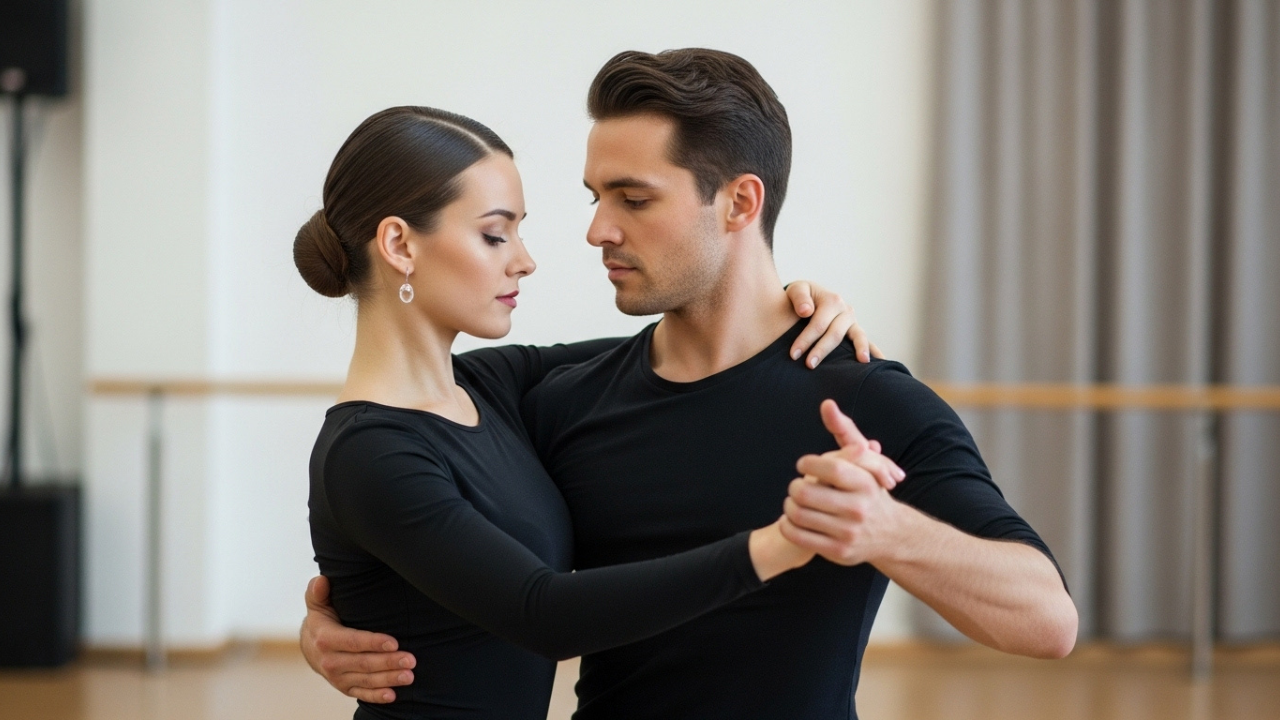
Although Bachata is often described as an intimate dance, it doesn’t mean it has to be uncomfortable. Dancers can choose either a closed or open position, depending on personal comfort, style, and the music.
Posture and Partnering Tips:
-
Stand upright with relaxed shoulders
-
Optional: Maintain soft eye contact to improve communication and lead-follow clarity
-
Leaders: Hold your partner’s right hand with your left, palm to palm
-
Followers: Gently rest your left hand on the leader’s shoulder or upper arm
-
Keep the hand pressure soft—don’t grip or pull
The aim is to create a dance frame (in French: cadre)—a light, responsive connection (connexion) that allows both dancers to feel and follow each other with ease.
Bachata Dance Vocabulary: English to French Table
| English Term | French Term | Description / Context |
|---|---|---|
| Basic Step | Pas de base | The foundational 8-count movement |
| Tap | Touche / Tap | The 4th and 8th beat – no weight |
| Leader | Guideur | The person who initiates movements |
| Follower | Suiveur / Suiveuse | The person who follows the lead |
| Frame / Hold | Cadre / Tenue | The physical connection and posture between partners |
| Turn | Tour | A rotation or pivot step |
| Connection | Connexion | The feeling of link and responsiveness in the dance |
| Step Forward | Pas en avant | Often used in travel steps or variations |
| Step Back | Pas en arrière | Used in movement-based patterns |
| Musicality | Musicalité | The dancer’s expression of the rhythm and accents |
At the very beginning, memorizing key terms and movement cues in French will help you stay confident during classes, follow online tutorials, and better understand instructions in your native language.
Practicing Your Bachata Steps Without a Partner
One of the great things about Bachata is that you don’t need a partner to practice. Many dancers start their journey solo and only join social dance settings once they feel confident.
Here’s how you can train on your own effectively:
1. Use a Mirror
Position yourself in front of a full-length mirror so you can check your:
-
Posture
-
Foot placement
-
Movement fluidity
2. Count Aloud in French
Counting out loud using French rhythm terms builds:
-
Muscle memory
-
Language reinforcement
-
Better timing with music
3. Watch YouTube in French
Select French-language tutorials to hear the terminology while watching how movements are executed. This helps:
-
Train your ear for French
-
Reinforce movement names visually and aurally
4. Repeat the Basic 8-Count
Set a timer and practice the basic Bachata step for five minutes daily. Repetition creates familiarity and flow.
5. Add Light Styling
Try adding simple styling elements such as:
-
Hip accents on the tap
-
Arm waves or open frames to play with musicality
Growing from the Foundations: Ready for Your Next Bachata Move?
If you’ve already started practicing the basic steps, then congratulations — you’re now part of a global, joyful, and expressive dance culture.
In Part 1, you explored:
-
The basic rhythm (1–2–3–tap)
-
The side-to-side step
-
The French counts and terminology
-
Good posture and connection
Now, in Part 2, you’ll level up:
-
Learn your first turns
-
Improve your sense of musicality
-
Find French-speaking classes
-
Learn how to express more dance vocabulary
-
Receive practical advice to make your dance journey enjoyable—regardless of your starting point
Beginner Turns in Bachata
Once the basic step feels comfortable, you can start introducing beginner turns. These add variation and help improve timing, balance, and connection awareness.
The Right Turn (French: Tour à droite)
This is the most common beginner turn, usually performed by the follower when the leader gently lifts the follower’s hand.
Follower’s Footwork:
-
Step forward with the right foot (1)
-
Step with the left and begin to pivot (2)
-
Complete the turn with the right foot (3)
-
Tap with the left (4)
Leader’s Role:
-
Maintain a basic side step
-
Guide the follower by raising your left arm gently and in time
The Half Turn Combo
This is a fun, simple variation where the follower does a half turn, followed by a basic step. It:
-
Helps build momentum
-
Keeps rhythm steady
-
Makes the dance more dynamic while remaining beginner-friendly
Key Tips for Practicing Turns
-
Keep your steps short – Avoid overstepping or stretching too far
-
Use your head to “spot” – This helps you stay balanced and maintain direction
-
Always return to the basic step after turning — it resets your body’s rhythm
Musicality: How to Dance With the Music
The relationship between a dancer and music is one of the most captivating aspects of Bachata. This connection is known as musicality (French: musicalité)—the art of dancing with the music rather than just to it. Musicality is what transforms simple steps into emotional expression.
Entry-Level Aspects of Musicality
If you’re just starting out, here are three foundational tips to develop your sense of musicality:
1. Listening to the Beat
-
Most Bachata songs have a clear, strong beat.
-
Count aloud: 1, 2, 3, 4, tap, keeping time with the drums or guitar.
2. Use the Pauses
-
The tap (or touche in French) on the 4th and 8th counts is a chance to:
-
Add emotion
-
Insert a pause
-
Create a body accent
-
3. Feel the Tone
-
Romantic songs inspire slow, flowing movement
-
Faster songs invite snappy, energetic styling
Practice Tip:
Play a slow Bachata track, and rather than focusing on steps, try:
-
Simply moving to the rhythm
-
Allowing your body to respond naturally
-
Prioritizing sensation over choreography
Great Songs to Practice Musicality With:
-
Burbujas de Amor – Juan Luis Guerra
-
Eres Mía – Romeo Santos
-
Amor Eterno – Toby Love
Body Movement (French: Mouvements corporels)
In Sensual Bachata, body movement becomes especially important. While beginners don’t need to master body isolations immediately, getting familiar with subtle movement will enrich your experience.
Beginner-Friendly Body Movements:
-
Hip taps during the 4th and 8th beats
-
Shoulder rolls integrated into the basic step
-
Soft chest movements during slower musical sections
These movements should never be forced. Always work within your natural range and gradually build fluidity.
Learn French-Beginner Bachata Dance in Paris (and Beyond)
If you’re studying in France or seeking instruction in French, there are plenty of resources both online and in person, specifically tailored for beginner dancers.
Where to Look for In-Person Courses
Use search phrases on Google or Facebook such as:
-
“Bachata débutant + [city name]”
-
“Danse latine débutant Paris / Toulouse / Marseille”
-
“Stages de Bachata Sensuelle débutant”
Top Cities in France to Learn Bachata:
-
Paris
-
Lyon
-
Toulouse
-
Montpellier
-
Lille
-
Bordeaux
-
Strasbourg
Most reputable schools:
-
Have experienced instructors
-
Offer introductory classes in French
-
Do not require a partner
💻 Online Platforms Offering French-Language Classes
| Platform | Language Support | Type | Notes |
|---|---|---|---|
| YouTube (e.g. Bachata France) | French | Free video tutorials | Great for solo practice and step breakdowns |
| Udemy | Some in French | Paid structured course | Look for ratings and French audio/subtitles |
| MoveWithMeDance | French content | Online membership | Known for breakdowns of Sensual style |
| Apprentus | French teachers | 1-on-1 online | Book private lessons tailored to your level |
How to Meet People at Your First Bachata Social (Even as a Beginner)
Dancing socially for the first time can be a scary thought—but it doesn’t have to be. Bachata socials (soirées Bachata in France) are friendly, welcoming events meant for everyone, regardless of experience.
What Is a Social Like?
A typical Bachata social includes:
-
A short lesson to warm up (usually 30–45 minutes)
-
After the lesson, social dancing begins
-
A mix of Bachata, Salsa, and Kizomba music
-
No partner required—the majority of attendees rotate partners throughout the night
A Few Hints for Your First Social:
-
Bring a friend if you’re nervous—but feel free to dance with others
-
Say: “On danse ?”—this is the usual way to invite someone to dance
-
If you make a mistake, laugh about it—everyone was a beginner once
-
Wear slipper-like shoes, preferably with flat and slightly slippery soles (avoid rubber soles)
-
Bring water and pace yourself—most socials run late into the night
Confidence-Building as a New Dancer
The biggest challenge for new dancers isn’t usually the steps—it’s confidence. Here are a few easy ways to build yours:
-
Practice daily, even just 5–10 minutes
-
Dance in front of a mirror to self-correct your posture
-
Record yourself to track your improvement
-
Watch beginner videos in French or bilingual videos to grow accustomed to the language and steps
-
Consider joining beginner-friendly bootcamps or intensive weekends
-
Don’t focus on perfection—just enjoy yourself
Reminder:
Even advanced dancers still practice the basic step.
Everyone remembers their first time dancing socially—you’re not alone.
Advanced Beginner: Adding Flavor to Your Dance
Once you’re comfortable with the basic step and your first turn, you may want to explore:
-
Cross-step Bachata (stepping side/back instead of just side-to-side)
-
Box step (Dominican style)
-
Basic dips and body rolls (often taught in Sensual Bachata)
-
Breaks (musical pauses or “hits” that you respond to with movement)
Ask your instructor or video teacher where these movements fit into the music. The more you understand the structure of the music, the more naturally you’ll be able to move.
Summary
Dancing Bachata in your favorite language is a gift you give to yourself. It’s more than just movement—it’s rhythm, connection, and expression. Whether you’re dancing in your room, in a French studio, or with an app, these first steps are your passport into a joyful dance culture.
Keep in mind:
No one starts perfect. But with every step, you gain rhythm, self-belief, and pleasure.
So the next time that Bachata beat kicks in—tap your foot, smile, and step on one.
You’re officially a dancer.